bitcoin trading tips for beginners
<p>ALGORITHMIC CRYPTO TRADING: EVERYTHING YOU WANT TO KNOW (BUT WERE AFRAID TO ASK)</p>
<p>Hey! So you've heard the term "algo trading" floating around and you're trying to figure out if it's actually useful or total overkill? Let me break it all down for you in plain language.</p>
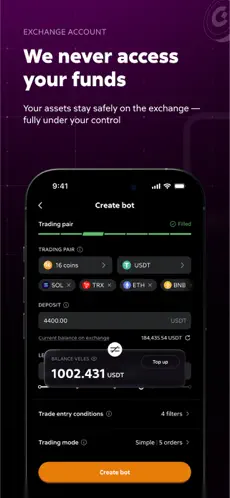
<p>At its core, algorithmic (or "algo") crypto trading means letting a computer program do your trading for you. You program the logic — entry points, exit points, risk levels — and the bot fires trades automatically, day and night, without ever needing a nap.</p>
<p>Here are the main types you'll come across:</p>
<p>• Spot bots — deal in real coins (think BTC, ETH) on major exchanges like Binance or Bybit.
cryptocurrency bot with risk management
• Futures bots — handle leveraged derivatives, so you can go long or short depending on market direction.
• Grid bots — spread buy/sell orders across a range of prices to capture gains from up-and-down movement.
• Arbitrage bots — hunt price gaps between exchanges and snipe the difference.</p>
<p>Here's the simple truth: you have emotions. Your bot doesn't. That matters a lot in trading. Here's what bots bring to the table:</p>
<p>1. Emotion-free trading — no panic, no FOMO, just the logic you programmed.
2. Backtesting — run your strategy on historical data BEFORE you risk a single dollar.
3. Ready-made playbooks — proven strategy templates already exist, so you don't have to start from scratch.
crypto trading bot setup
4. Round-the-clock operation — crypto never sleeps, and now neither does your portfolio.
5. Risk management on autopilot — set your limits once and let the bot enforce them every single trade.</p>
<p>В«This sounds great, but how do I get going?В»</p>
<p>First step: find an exchange with solid API support. Binance, Bybit, and Kraken are all good starting points. Then grab a bot platform: cloud-based options like 3Commas, Cryptohopper, or Coinrule are beginner-friendly; if you're comfortable with code, open-source tools like Freqtrade give you full control. Start with a demo/paper trading account so you're not burning real money while you learn. For futures traders specifically: confirm your bot manages margin and handles liquidation risk — that's non-negotiable.</p>
<p>В«Which strategy templates should I actually try?В»</p>
<p>Here's a handy overview to get you oriented:</p>
<p>Strategy
-----------------------
Buys low, sells high within a set range
Trending markets
Buys more on dips — great for spot
RSI Overbought/Oversold
Catches price gaps between exchanges</p>
<p>В«Is leveraged futures trading possible with a bot?В»</p>
<p>Yes — exchanges like Bybit and Binance Futures offer up to 100x leverage. But let's be real: leverage is a double-edged sword. What goes up fast can come down just as fast. Hard rules: define your maximum drawdown, use trailing stops, and never put more than 1-2% of your portfolio on any single trade. Bonus points if your bot auto-adjusts leverage according to market volatility — that's a genuinely useful feature.</p>
<p>В«How do spot bots and futures bots compare?В»</p>
<p>• Spot bots: real ownership of assets. Gains come from price movement or spread capture. Clean and simple — no funding rates, no forced liquidations.
• Futures bots: derivative contracts only. Great for shorting, but you're exposed to periodic funding fees and liquidation if the trade goes sideways.</p>
<p>Pick based on your risk appetite and goals.</p>
<p>В«Are these strategies actually profitable in 2025?В»</p>
<p>Honestly — it depends. Every strategy has conditions where it works and conditions where it doesn't — if someone promises you guaranteed profits, run. The process that works: backtest thoroughly, deploy with minimal capital, and only scale up the strategies that prove themselves. For example: a grid bot crushes it in sideways markets but bleeds in strong trends. On the flip side, a MACD trend-follower needs real momentum to perform — in quiet, indecisive markets it whipsaws constantly. The solution? Diversify — run several bots with complementary strategies so they smooth out each other's weaknesses.</p>
crypto algorithm trading software
<p>Key factors to evaluate before committing to a platform:</p>
<p>• Exchange support — will it actually work with your preferred exchange?
• Strategy flexibility — can you customize, or are you stuck with presets?
• API security — always use read-only or trade-only API keys. Withdrawal permissions are a hard no.
• Backtesting quality — realistic historical data with actual fee simulation.
• Support ecosystem — an active user community and strategy marketplace save you enormous amounts of trial and error.</p>
<p>Popular platforms worth checking out:</p>
<p>• 3Commas — clean interface, supports spot and futures, excellent portfolio management features.
• Cryptohopper — runs in the cloud, offers a built-in strategy marketplace, and supports paper trading.
• Freqtrade — open-source and free, Python-based, highly customizable (but needs some tech chops).
• Coinrule — drag-and-drop logic builder, completely code-free, ideal for absolute beginners.</p>
<p>=== TRACKING PERFORMANCE: THE NUMBERS THAT MATTER ===</p>
<p>Track these numbers. They'll tell you the truth:</p>
<p> WHAT IT MEANS
--------------------------------------
50–70% (strategy-dependent)
Gross profit Г· Gross loss
Worst peak-to-trough dip
Shoot for above 1.0
How long you're in each position </p>
<p>--- MISTAKES THAT WILL BURN YOU ---</p>
<p>Here are the pitfalls that trip up new algo traders — skip the tuition:</p>
<p>1. Over-optimization — endlessly fine-tuning a strategy to fit past data creates an illusion of performance that collapses in real conditions.
2. Overlooking trading fees — a bot running hundreds of trades a day can have its profits wiped out by maker/taker fees. Always model them in.
3. Skipping risk controls — not having stop-losses and position limits isn't bold, it's reckless. Set them without exception.
4. Over-leveraging — high-leverage futures positions can evaporate in minutes during a volatile move. Respect the risk.
crypto trading automation platform
5. Ignoring market regime — a bull market strategy can destroy you in a bear market. Know your context.</p>
<p>If you're committed to your crypto game and done with manually babysitting price charts, algo trading is genuinely worth your time. Bots strip out the emotions, never stop working, and execute proven strategies without demanding your constant presence.</p>
<p>For spot traders, grid and DCA bots are a steady, low-stress way to accumulate. For futures traders, MACD and RSI bots open up leveraged opportunities — just respect the risk controls.</p>
<p>Core principles to live by: begin small, validate everything through backtesting, and grow your position only when live results back it up. Trading is a craft you improve over time, not a lottery ticket.</p>
crypto portfolio automation
<p>The future of trading is automated. Might as well get in on it.</p>
<p>Disclaimer: Crypto trading carries serious risk. Past performance is no guarantee of future results. Always do your own research before deploying any bot or strategy with real capital.</p>
cryptocurrency bot with risk management automated bitcoin trading crypto grid bot review crypto bot for high volatility bitcoin trading on autopilot b5c92_7
@grypto_birj